Source Push Type Oil Pressure Sensor for Industrial Use
Find and compare 30 push type oil pressure sensor options from China. Evaluate specifications like 4-20mA output, IP65 protection, and 12-month warranty for reliable industrial monitoring applications across various sectors; compare the available evidence and request quotations based on your requirements.
Key considerations
Products List


Comprehensive Sourcing Guide
Push Type Oil Pressure Sensor Sourcing Guide
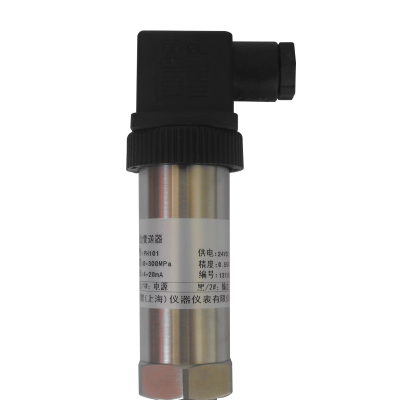
Buyers evaluating push type oil pressure sensors must first distinguish between general gas pressure transmitters and specialized units designed for oil media. The observed product listings indicate a strong focus on explosion-proof pressure transmitters suitable for non-combustible, non-corrosive gases, which requires careful verification if the intended application involves actual oil or combustible fluids. Procurement teams should scrutinize the "Suitable Medium" attribute to ensure the sensor is explicitly rated for the specific fluid dynamics of their hydraulic systems, as many listed units are optimized for air and inert gases rather than viscous oil environments.
The market data reveals a diverse range of models, from the SAC-H-05 to the SAC-PCM300DT, each offering distinct output signals and pressure ranges. While some units support a broad measurement range up to 100MPa, others are limited to lower differential pressures, necessitating a precise match between the sensor's maximum working pressure and the system's peak operating conditions. Buyers must verify that the selected model's mechanical vibration tolerance and operating temperature range align with the harsh conditions typical of oil pressure monitoring, ensuring the device can withstand the specific thermal and mechanical stresses of the application without premature failure.
Product Scope and Observed Listing Signals
The current market listings for push type oil pressure sensors demonstrate a wide variance in protection grades, with some units rated at IP54 and others achieving the higher IP65 standard. This discrepancy highlights the critical need for buyers to confirm the ingress protection rating required for their specific installation environment, whether it is a dry indoor control room or a wet, dusty outdoor hydraulic station. The presence of both single-item selling units and customizable options suggests that procurement strategies should account for potential batch variations and the availability of tailored solutions for unique mounting or interface requirements.
Listing signals also indicate a significant variation in power supply requirements, ranging from 9-24VDC to broader DC 12-36V ranges, with some models supporting dual voltage inputs for display integration. Buyers must carefully cross-reference the power specifications of the sensor with their existing control system voltage to avoid compatibility issues that could lead to signal instability or hardware damage. The observed output signals, including 4-20mA, 0-10V, and RS485, further complicate the selection process, requiring a detailed audit of the downstream data acquisition hardware to ensure seamless integration and accurate data transmission.
Technical Specifications to Verify
When verifying technical specifications, the measurement accuracy and long-term stability are paramount for maintaining system reliability and reducing maintenance costs. The observed data shows accuracy classes ranging from 0.5% to 0.25% F.S., with some models offering customized accuracy down to 0.3%, while stability figures vary between ±0.1% and ±0.2% F.S. per year. Procurement teams must prioritize these metrics based on the criticality of the pressure monitoring task, ensuring that the selected sensor maintains its calibration over the expected service life without requiring frequent recalibration or replacement.
The operating temperature and compensation temperature ranges are equally critical, as oil systems often experience significant thermal fluctuations that can affect sensor performance. Listings indicate operating temperatures from -20°C to 80°C and compensation ranges from -10°C to 70°C, with some units capable of withstanding -40°C to 85°C. Buyers must ensure the sensor's thermal limits exceed the maximum and minimum temperatures expected in their specific application, accounting for potential heat spikes or cold starts that could push the device beyond its standard operating envelope and cause measurement drift or permanent damage.
Compliance and Safety Documentation
Safety compliance is a non-negotiable aspect of sourcing pressure sensors for industrial applications, particularly where explosion risks are present. The observed listings include units with an explosion-proof grade of Exdiict6 Ga and CE certification, which are essential for operations in hazardous environments. Buyers must request and verify the specific certification documents for the exact model number being purchased, as safety ratings can vary significantly between product lines and may not apply universally to all configurations or customizations offered by the supplier.
In addition to explosion-proof ratings, the mechanical safety features such as pressure overload capacity must be rigorously documented and verified. The data indicates overload pressures of 150% F.S. or specific multipliers like 2 times under 10MPa, which serve as a critical safety margin against system surges. Procurement teams should ensure that the supplier provides clear documentation on these overload limits and the testing protocols used to validate them, guaranteeing that the sensor will not catastrophically fail during unexpected pressure spikes that could endanger personnel and equipment.
Cost Drivers and Commercial Terms
The cost of push type oil pressure sensors is heavily influenced by the complexity of the output signal and the level of customization required. Units offering multiple output options like 4-20mA, 0-10V, and RS485, or those featuring digital LED displays, typically command higher prices than basic single-output models. Buyers should analyze the total cost of ownership, considering that a slightly more expensive sensor with advanced diagnostics or higher accuracy might reduce long-term operational costs by minimizing downtime and calibration frequency.
Commercial terms such as Minimum Order Quantity (MOQ) and lead times are also significant factors in the procurement decision-making process. The observed MOQ range of 1 to 100 units suggests flexibility for small-scale testing or pilot projects, while larger orders may benefit from volume discounts. However, buyers must be cautious of potential lead time variations associated with customized models, as the availability of specific certifications or tailored specifications can extend the delivery schedule, potentially impacting project timelines and inventory planning.
Supplier Qualification and Quality Control
Supplier qualification for pressure sensors requires a thorough assessment of their manufacturing capabilities and quality control processes, particularly regarding the consistency of their explosion-proof and protection grade ratings. Buyers should verify that the supplier maintains strict control over the production of critical components like the diaphragm and sealing elements, which directly impact the sensor's ability to withstand high pressures and harsh environmental conditions. Requesting detailed quality assurance reports and factory audit results can provide insight into the supplier's ability to consistently meet the specified accuracy and stability standards.
Quality control also extends to the testing procedures used to validate the sensor's performance under various conditions, including temperature drift and mechanical vibration. The observed specifications for vibration tolerance up to 20g and temperature drift of ±0.01% F.S./°C indicate a need for rigorous testing protocols. Procurement teams should inquire about the specific test equipment and methodologies used by the supplier to ensure that the sensors undergo comprehensive validation before shipment, reducing the risk of receiving units that fail to meet the advertised performance criteria.
Long-Term Procurement Checks
Establishing a framework for long-term procurement checks is essential for maintaining the reliability and performance of push type oil pressure sensors over their operational lifespan. Buyers should implement a schedule for periodic performance audits, comparing the sensor's current output against baseline calibration data to detect any drift or degradation that may indicate impending failure. This proactive approach allows for timely maintenance or replacement, preventing unexpected system failures and ensuring continuous, accurate pressure monitoring in critical industrial processes.
Furthermore, maintaining a robust relationship with the supplier for ongoing support and spare parts availability is crucial for long-term operational success. Buyers should verify the supplier's commitment to product lifecycle management, including the availability of replacement parts and technical support for troubleshooting. Establishing clear communication channels and service level agreements can ensure that any issues arising from sensor performance or compatibility are addressed promptly, minimizing downtime and protecting the integrity of the overall hydraulic system.
FAQs
What is the measurement range for the SAC-H-05 model?
The SAC-H-05 model features a measurement range spanning from -100PA to 10kpa and up to 100MPa. This wide span allows for versatile applications involving air and non-combustible gases. The device supports direct mounting without brackets and operates within a working temperature of -40℃ to 85℃. It provides a 4-20mA output signal for reliable industrial monitoring.
Can the SAC-PCM300DT handle high pressure overload conditions?
Yes, the SAC-PCM300DT is designed to withstand significant pressure overload. It can handle two times the pressure under 10MPa and 1.5 times for higher pressures. This robustness ensures durability in demanding environments. The unit features an explosion-proof grade of Exdiict6 Ga and maintains a stability of ±0.1%Fs per year for consistent performance.
Which output signals are supported by the SAC-132-DN?
The SAC-132-DN supports multiple output signals including 4-20mA, 0-10V, 0-5V, 1-5V, and RS485. This flexibility allows easy integration with various control systems. It operates on DC 12~36V or DC 15~36V with a display. The device offers an accuracy class of 0.25%Fs or 0.5%Fs, ensuring precise differential pressure measurement.
What is the accuracy class for the SAC-YC-131 sensor?
The SAC-YC-131 sensor provides a measurement accuracy of 0.5%F.S. It is suitable for gauge and absolute pressure measurements ranging from -0.1MPa to 6MPa. The unit maintains a measurement stability of ±0.2%Fs per year. It operates in working humidity up to 95%Rh and withstands overload pressure at 150%Fs for safety.
Does the SAC-PCM-302 offer customized options for buyers?
Yes, the SAC-PCM-302 offers customized options to meet specific buyer requirements. It provides a comprehensive accuracy of ±1.0%Fs. The device supports output signals such as 4-20mA, 0-10V, and 0-5V. This customization capability allows for tailored solutions in various industrial applications while maintaining reliable performance standards.
What protection grade is provided by the explosion-proof transmitter?
The explosion-proof pressure transmitter provides an IP65 protection grade. This ensures effective protection against dust and water jets. Some models also list an IP54 grade for specific variants. The device is suitable for measuring air and non-corrosive gases. It features a 12-month warranty and operates within a compensation temperature range of -10 to 70℃.